
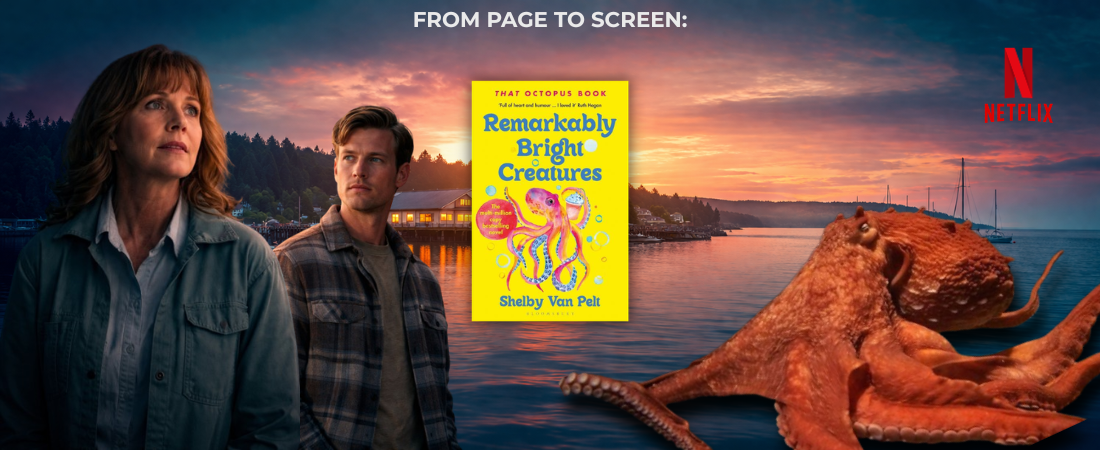
The Bestselling Book Is Now A Netflix Movie.
Some books find their readers quietly, without fanfare, and then hold on to them far longer than expected. Remarkably Bright Creatures by Shelby Van Pelt was exactly that kind of book. A debut novel about grief, loneliness, and an unexpectedly wise octopus, it resonated with readers in a way that felt almost word-of-mouth, deeply personal, and completely genuine.
Now it’s been adapted into a Netflix movie, released on May 08, 2026. Here’s everything you need to know, including why reading the book before the release date is very much worth your time.
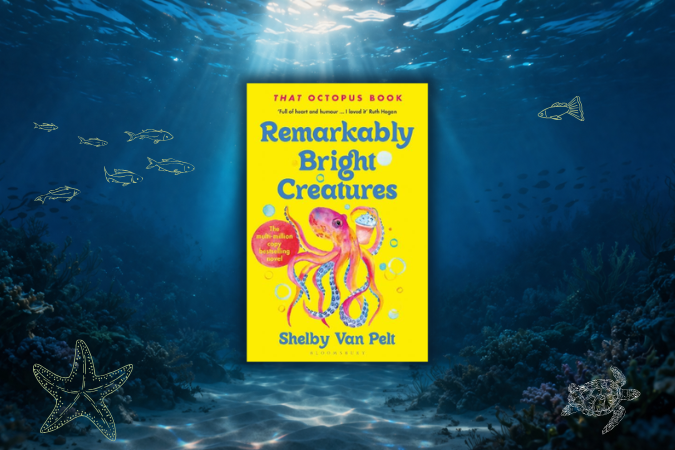
The story centres on Tova Sullivan, a widow working the night shift at a small aquarium in a quiet seaside town, still carrying the unresolved grief of her son’s disappearance years earlier. Her carefully managed routine begins to shift through the most unlikely of friendships: Marcellus, a giant Pacific octopus with an extraordinarily perceptive understanding of the humans around him.
Running alongside Tova’s story is Cameron, a young man drifting through life and searching, without quite knowing it, for answers about his own past. As their worlds gradually intersect, the novel becomes something quietly extraordinary, a story about the connections we don’t see coming, the losses we never fully recover from, and the unexpected ways we find our way back to each other.
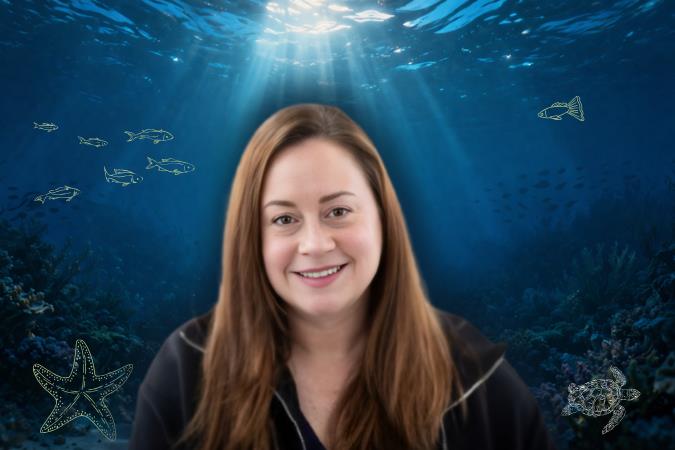
Shelby Van Pelt came to fiction from outside the traditional literary establishment, and it shows in the best possible way. Remarkably Bright Creatures is her debut novel, and the originality of its premise, an octopus as both narrator and emotional anchor, could easily have tipped into gimmick. Instead, Van Pelt handles it with such warmth and precision that Marcellus becomes one of the most memorable characters in recent fiction, human or otherwise.
Her writing is deeply character-driven, attentive to grief and healing in ways that feel earned rather than sentimental, and quietly funny in places you don’t always see coming.
Netflix has brought the adaptation to screens under the direction of Olivia Newman, with a cast that feels genuinely well-suited to the material.
Sally Field takes on the role of Tova Sullivan. Lewis Pullman plays Cameron. And Alfred Molina lends his voice to Marcellus, a piece of casting that, on reflection, feels just right.
Every adaptation involves trade-offs, and this one faces a specific challenge: a significant portion of the novel’s emotional texture comes from inside Marcellus’s head. His narration is witty, unexpectedly moving, and provides much of the book’s tonal contrast. Bringing that interior voice to screen will require real creative thought, whether through voiceover, visual storytelling, or something else entirely.
The pacing is likely to shift too. The book moves slowly and deliberately, letting emotions accumulate in the background before they surface. Films, particularly those aimed at a wide audience, tend to move differently, and some of the novel’s quieter subplots may well be trimmed in favour of the central story.
None of that means the adaptation won’t be good. It may be very good. But it will, almost certainly, be a different experience.
Stories like this one are genuinely rare. The kind that don’t rely on plot twists or dramatic confrontations, but instead build something in you slowly, so that by the end you feel the loss of the characters in a way that’s hard to explain.
Reading the book before watching the film gives you access to that experience in full, the layered interiority, the specific rhythm of Van Pelt’s prose, the way Marcellus sees everything with a clarity the human characters can’t quite manage. Some of that will translate to screen. Some of it, by the nature of the medium, won’t.
The Remarkably Bright Creatures movie has everything it needs to be a memorable adaptation: a gifted director, a cast with real emotional range, and source material that people already love. But here’s the honest truth. Stories like this one live in the quiet moments, in the pauses, the unspoken things, the slow accumulation of feeling. The book has already delivered that. Whether the film does too is a question for your to find the answer for.