
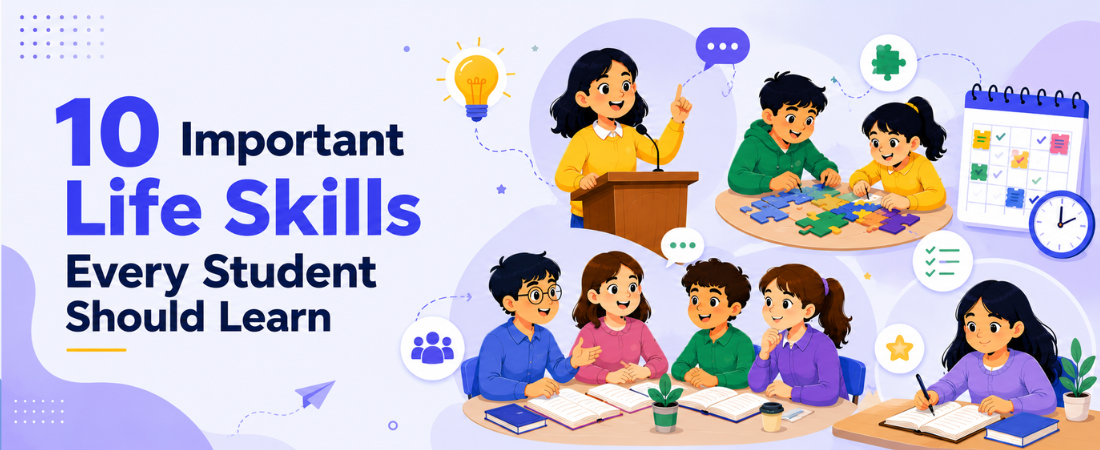
Academic knowledge will only take a student so far. The ability to sit an exam or recall facts is important, but it doesn’t fully prepare a young person for the messier, more unpredictable business of actual life: navigating relationships, handling setbacks, making decisions under pressure, and figuring out who they are in the process.
That’s where life skill activities come in. And the earlier students begin developing them, the better.
What Are Life Skills?
Life skills are the everyday abilities that help people manage themselves and their relationships with others — things like communicating clearly, thinking through a problem, understanding their own emotions, and knowing how to work alongside people who are different from them. They don’t appear on a report card, but they quietly shape almost everything a student does, inside the classroom and beyond it.
Here are ten of the most important life skills for students, and some simple ways to help develop each one.
Important Life Skills for Students
- Communication Skills
- Teamwork Skills
- Problem-Solving Skills
- Critical Thinking Skills
- Decision-Making Skills
- Time Management Skills
- Leadership Skills
- Social Skills
- Emotional Awareness
- Self-Confidence
1. Communication Skills
Being able to express yourself clearly, whether you’re speaking, writing, listening, or simply trying to be understood, is one of the most useful things a person can learn. Role-playing exercises, group discussions, and even casual debates give students the chance to practise putting their thoughts into words and actually hearing what others are saying in return.
2. Teamwork Skills
Learning to work with other people even if they are people you didn’t choose and don’t always agree with, is an important skills that will follow students into every stage of their lives. Social skill activities like group projects and collaborative games teach children how to share responsibility, compromise, and get things done together, even when it isn’t easy.
3. Problem-Solving Skills
Life presents problems constantly, and students who can approach them calmly and creatively are at a real advantage. Puzzles, challenges, and open-ended activities build the habit of looking for solutions rather than shutting down when things get difficult. These are effective critical thinking activities for students.
4. Critical Thinking Skills
Not everything is as straightforward as it first appears, and critical thinking is what helps students slow down and examine a situation before jumping to conclusions. Debates, discussions, and activities that ask students to consider multiple perspectives sharpen this skill considerably, and make them better learners in every subject.
5. Decision-Making Skills
Every day involves choices, small and large. Students who practise thinking through options and considering consequences develop a stronger sense of responsibility, and the confidence to trust their own judgement. Story-based scenarios, where students talk through what a character should do and why, are a surprisingly effective way to build this.
6. Time Management Skills
There is always more to do than there is time to do it, and learning to manage that reality early saves students an enormous amount of stress later on. Building the habit of making schedules, breaking tasks into steps, and prioritising what matters most sets them up well for both academic demands and everyday life.
7. Leadership Skills
Leadership isn’t about being the loudest person in the room. It’s about taking responsibility, listening to others, and helping a group move forward together. Team activities and group projects give students the chance to practise leading and following in ways that build both confidence and humility.
8. Social Skills
Getting along with other people is, it turns out, one of the most important things any of us ever do. Students who develop strong social skills like knowing how to listen, how to read a room, how to be kind without being a pushover, form better friendships, handle conflict more gracefully, and find their way more easily in group settings.
9. Emotional Awareness
Understanding your own feelings and recognising that other people have feelings too is foundational to almost everything else on this list. Journaling, storytelling, and open conversations about emotions help students develop the kind of self-awareness that lets them handle pressure without falling apart, and connect with others without losing themselves.
10. Self-Confidence
Confidence isn’t something students either have or don’t; it’s something that grows with practice and encouragement. Public speaking, debates, and activities that push students gently outside their comfort zone build the kind of self-belief that makes them more willing to try, more resilient when they fail, and more engaged in everything they do.
Benefits of Life Skills Activities
Regular life skills activities for students improve confidence, teamwork, communication, and problem-solving abilities. These skills support both academic success and personal growth. They also prepare students for future challenges in everyday life.