
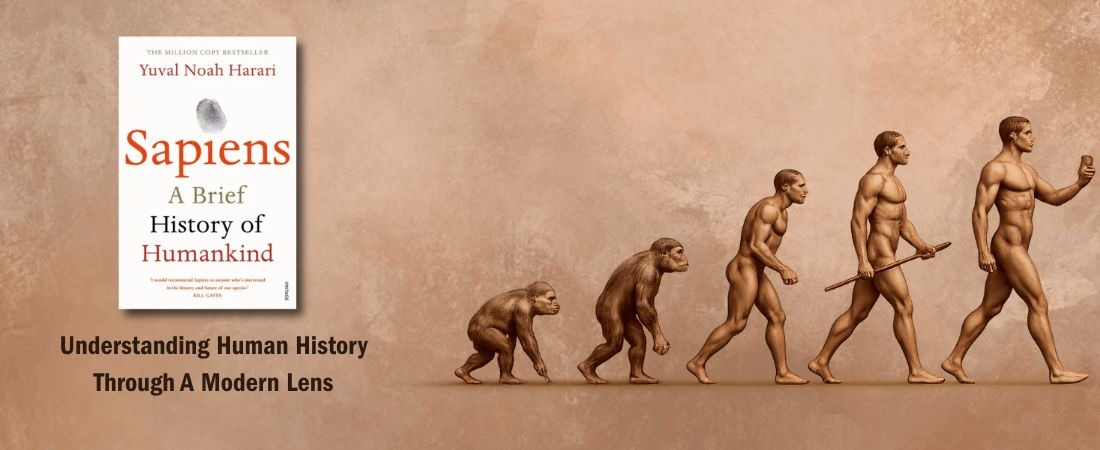
The sapiens book by Yuval Noah Harari explores how humans evolved from small groups of hunter-gatherers into dominant global societies. Instead of focusing mainly on wars and kings, the book focuses on biology, culture, economics, and psychology. Therefore, it explains how societies evolved over thousands of years.
Find out what makes the book such a hit, explore the quirky genius of author Richard Osman, unpack the new Netflix show with its star-studded cast, and point you to the rest of the series. This is the ultimate book recommendation if you love crime fiction that’s clever, charming, and totally binge-worthy.
Sapiens: A Summary
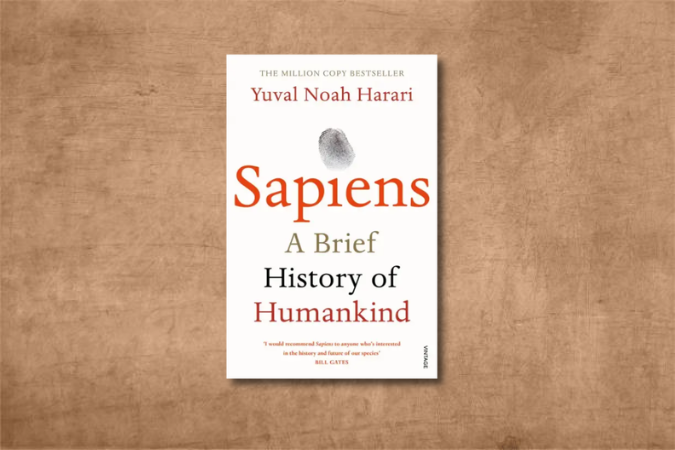
At its core, the Sapiens explains how shared beliefs shaped civilization. Harari argues that humans gained advantage not only through intelligence but also through their ability to create collective myths. For example, concepts such as currency, religion, political borders, and social systems exist mainly because people collectively accept them. Consequently, these shared ideas allowed strangers to cooperate at scale.
Moreover, these shared narratives allowed trade networks, political structures, and modern economies to grow. Harari suggests that belief systems often drive history as much as technology or biology. Therefore, a key takeaway is simple: human cooperation depends heavily on stories people agree to believe.
So, why is everyone hooked?
- Unlikely Heroes: Instead of the typical brooding detective, we get four elderly sleuths with colourful pasts and razor-sharp minds.
- Page-Turning Plot: Full of twists, red herrings, and laugh-out-loud moments.
- Relatable Themes: Friendship, ageing, justice, and the idea that it’s never too late to find purpose.
- Global Appeal: With translations in 40+ languages and fans across the world, this is more than just a British hit.
If you’re compiling a list of book recommendations that blend brains and heart, this series should be at the top.
Who Is Yuval Noah Harari?

Yuval Noah Harari is an Israeli historian, professor, and public intellectual known for making complex historical and scientific ideas accessible to general readers. His research focuses on world history, human evolution, and the long-term future of humanity. Apart from the sapiens book, his major works include Homo Deus and 21 Lessons for the 21st Century. These books explore themes such as future technology, artificial intelligence, ethics, and global challenges. Therefore, readers who enjoy Sapiens often explore these titles to understand Harari’s broader intellectual framework.
Other Yuval Noah Harari Books
Homo Deus
A bold exploration of humanity’s future, asking what happens when humans seek to become gods through technology and artificial intelligence.
21 Lessons for the 21st Century
A timely reflection on politics, technology, fake news, identity, and survival in an increasingly uncertain modern world.
Money
A concise examination of how money became humanity’s most powerful shared myth, shaping empires, markets, and everyday life.
Special Operations in the Age of Chivalry 1100–1550
Harari’s academic study of medieval warfare, revealing how small elite units influenced battles long before modern special forces.
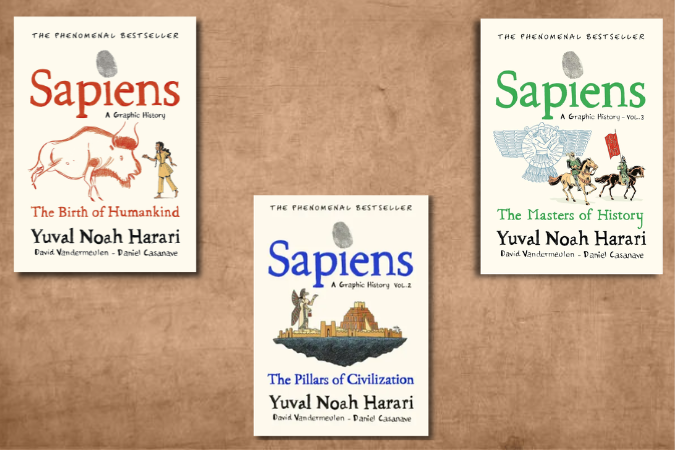
Sapiens: A Graphic History (Volumes 1, 2 & 3)
A visually engaging retelling of Sapiens, transforming human history into an accessible, illustrated narrative format.
Nexus
An exploration of how information networks — from ancient myths to modern AI — connect humans and shape the course of history.
Human History In A Graphic Version
At its core, the Sapiens explains how shared beliefs shaped civilization. Harari argues that humans gained advantage not only through intelligence but also through their ability to create collective myths. For example, concepts such as currency, religion, political borders, and social systems exist mainly because people collectively accept them. Consequently, these shared ideas allowed strangers to cooperate at scale.
Moreover, these shared narratives allowed trade networks, political structures, and modern economies to grow. Harari suggests that belief systems often drive history as much as technology or biology. Therefore, a key takeaway is simple: human cooperation depends heavily on stories people agree to believe.
Why Is Sapiens Book is Relevant Today?
The book connects ancient history with modern issues like globalization, climate concerns, and technological change. Consequently, this relevance explains why it attracts readers from different fields. One fascinating aspect of the Sapiens book is how it explains everyday concepts such as money, nations, and corporations as shared social agreements rather than physical realities.
The Sapiens book review discussion usually includes both admiration and criticism. Supporters praise its big-picture thinking and relevance. However, critics sometimes point out oversimplifications. Still, the book encourages readers to rethink assumptions about progress, society, and human identity.
For anyone interested in the history of humankind, cultural evolution, or future societal trends, Sapiens remains an influential and engaging read.
FAQs
What is the main idea of the Sapiens book?
The book explains how humans evolved socially, biologically, and culturally, and how shared beliefs helped build large civilizations.
Is the Sapiens book based on real history?
Yes. It draws from anthropology, biology, archaeology, and history, although some interpretations remain debated among scholars.
Is the book suitable for beginners?
Yes. The language is accessible, and it focuses on big-picture ideas rather than academic detail.
What makes the book popular?
Its interdisciplinary approach and clear storytelling make complex historical ideas easier to understand.
Does the book discuss modern issues?
Yes. It connects human history with current topics like globalization, technology, capitalism, and social change.
Is the Sapiens book available in Hindi?
Yes. Hindi translations are available through major bookstores and online platforms.