When you are a Bear of Very Little Brain, and you Think of Things, you find sometimes that a Thing which seemed very Thingish inside you is quite different.
Winnie-the-Pooh is a feeling. He is slow thoughts in a fast world. He is proof that kindness and friendship never go out of style.
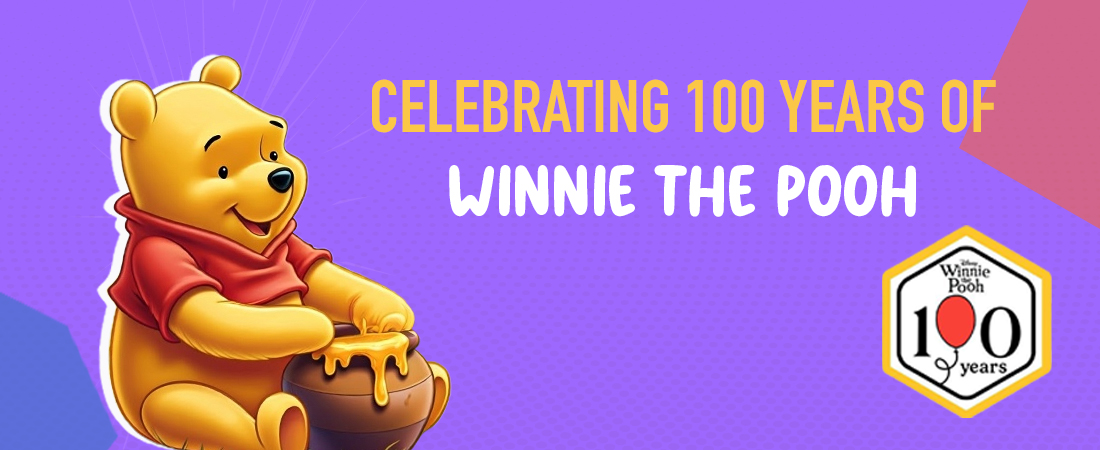
In Winnie-the-Pooh’s 100th anniversary year, it feels like the perfect time to stop, sit quietly, and think about why this gentle bear still matters so much. For nearly a century, Winnie the Pooh — or simply, Pooh — has been a source of comfort, calm, and soft wisdom for readers of all ages. Created by A. A. Milne, Winnie-the-Pooh is more than a children’s character. Dive in to find out more about the world’s most famous bear.
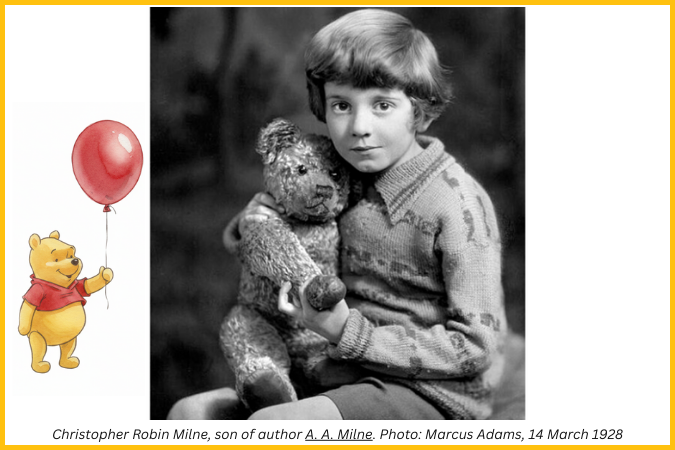
The story of Winnie-the-Pooh begins with a real bear. Winnie was a female black bear who lived at the London Zoo in the early 1900s. She was known for her calm nature and friendliness, and she quickly became a favourite with visitors.
One such visitor was Christopher Robin, the young son of A. A. Milne. Winnie inspired the first half of the fictional bear’s name, while a swan named Pooh completed it. From there, a whole new world grew.
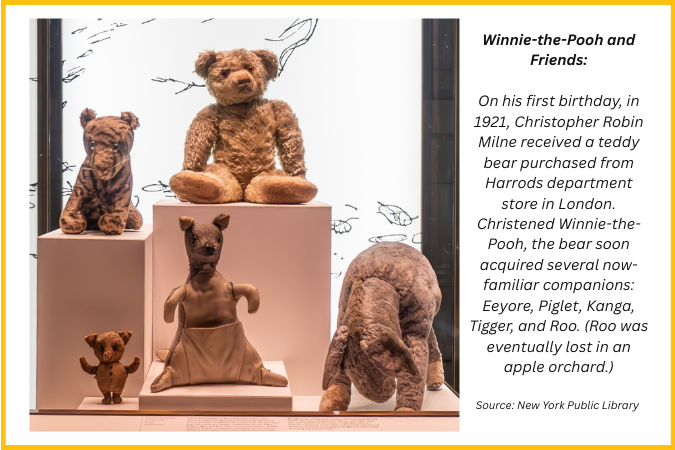
The characters in the stories were inspired by Christopher Robin’s toy animals. Piglet, Eeyore, Tigger, Kanga, and Roo all began life as simple stuffed companions. Their adventures took place in the Hundred Acre Wood, which was based on England’s Ashdown Forest. Because of this, the stories feel real, grounded, and gently familiar.
The stories of Winnie-the-Pooh are famously gentle. There are no epic battles or dramatic villains. Instead, there are small problems, thoughtful walks, and conversations that drift like clouds.
Pooh looks for ‘hunny’. Piglet worries. Eeyore loses his tail. Tigger bounces too much. And Christopher Robin listens patiently. Because the stakes are small, the emotions feel big and honest.
This is why the stories work so well. Children enjoy the humour and playful language. Adults, however, notice deeper truths about anxiety, friendship, loneliness, and joy. The simplicity is deliberate and powerful.
One of the main reasons Winnie-the-Pooh is so loved is his calmness. He is not clever in the usual way, and he does not pretend to be. He thinks slowly, speaks honestly, and accepts himself fully.
Pooh’s philosophy is gentle but meaningful. He believes friendship matters more than intelligence. He values honesty over pride. And he reminds us that it is okay to pause and think.
Each character reflects a different emotional truth. Piglet shows fear and courage. Eeyore represents sadness without shame. Tigger brings unstoppable energy. Together, they show that everyone belongs, even when they feel different.
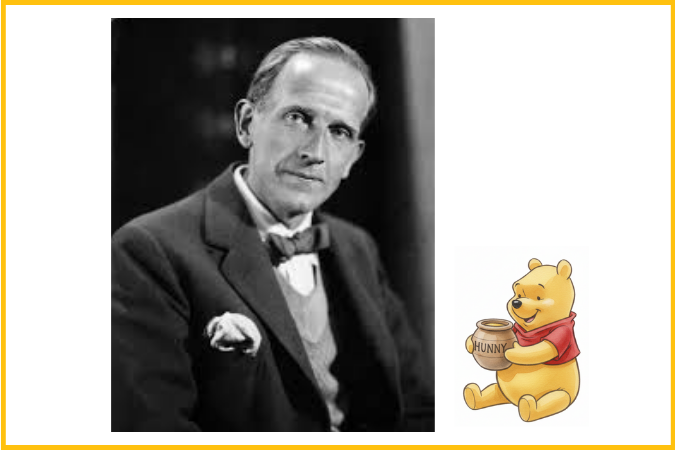
A.A. Milne was already a successful playwright and essayist beforecreating thePooh universe. However, his children’s stories became his most enduring work.
Milne never spoke down to young readers. His writing was playful, thoughtful, and deeply respectful of a child’s inner world. Because of this, Winnie-the-Pooh feels timeless rather than dated.
Even today, Pooh’s quotes are shared for comfort, wisdom, and reassurance. Few characters speak so softly and stay heard for so long.
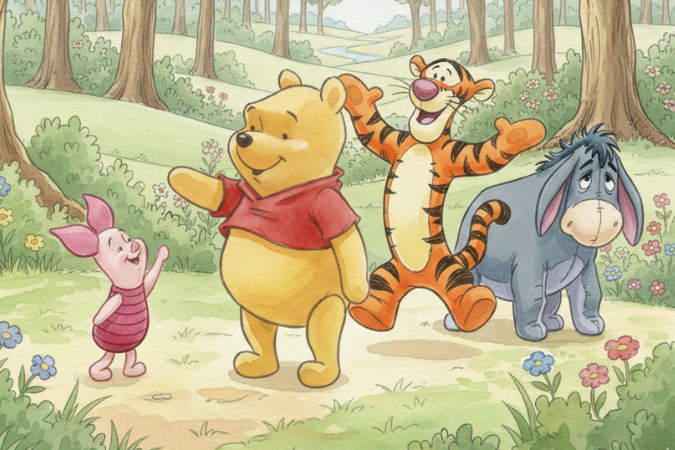
The popularity of Winnie-the-Pooh expanded worldwide after Disney adapted the stories in the 1960s. While the visual style changed, Pooh’s personality stayed true to Milne’s creation.
One of the most surprising moments in Pooh’s history was the success of Winnie Ille Pu, a Latin translation of the stories. It became an international bestseller, proving that Pooh’s charm works in any language.
Today, Pooh exists everywhere: books, films, quotes, toys, and shared memories across generations.
A Hundred Years Later, Still Just Right
As Winnie-the-Pooh turns 100, his relevance feels stronger than ever. In a world that rushes, he reminds us to slow down. In a world that overthinks, he reminds us to keep things simple.
Pooh teaches us that friendship is enough. That kindness matters. And that sometimes, doing very little is exactly what is needed. And if that is not wisdom, then perhaps wisdom is overrated.