
When you think about books that talk about politics and big ideas and how people feel you probably think of Victor Hugo. Victor Hugo wrote these stories a time ago in the 1800s, when a lot of things were changing in France. His stories ask questions about what’s right and wrong.
Victor Hugo liked to write about kindness and power. Victor Hugo showed how people can change and how some things are not fair. He did this in a way that feels real and honest.
The writing of Victor Hugo is not just made up stories it makes you think about the world and the people, in it. People still read Victor Hugos books. Talk about them because Victor Hugos work is still important today.
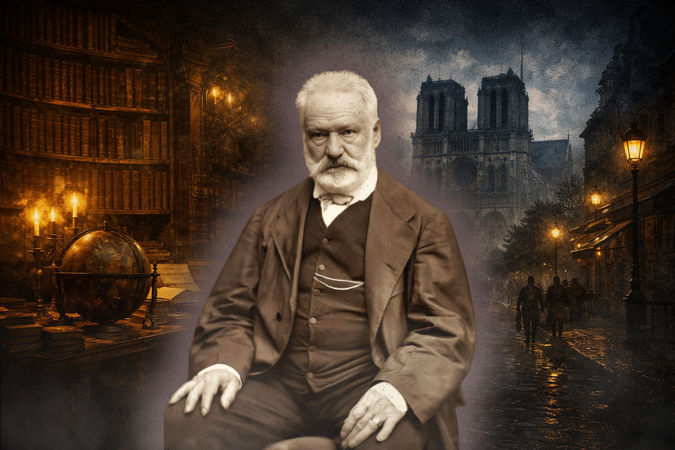
Victor Hugo was born on February 26 1802 in Besançon, France. Victor Hugo grew up in a place where politics was a deal. His father was a general under Napoleon so Victor Hugo moved around a lot when he was a kid. Victor Hugo saw different places and met people from different cultures and he heard a lot of different ideas about politics.
When Victor Hugo was in his twenties people already knew he was a good poet. Victor Hugo became a part of the Romantic movement, which was all about feeling and being unique. The Romantic movement was also about not following the rules of writing.
But Victor Hugo was not a writer Victor Hugo was also very interested, in politics.
He openly criticised injustice and authoritarian rule, which led to his exile after opposing Napoleon III. For nearly two decades, he lived in Jersey and Guernsey. These years turned out to be some of his most creatively powerful.
When he returned to France in 1870, he wasn’t just welcomed back, he was celebrated as a national icon. When he died in 1885, over two million people attended his funeral in Paris. It was a demonstration of how much his words had affected society.
That is why the books of Victor Hugo last, they work on many levels. On the one hand they are rich, dramatic stories with unforgettable characters. On the other hand they take up questions that are still open:
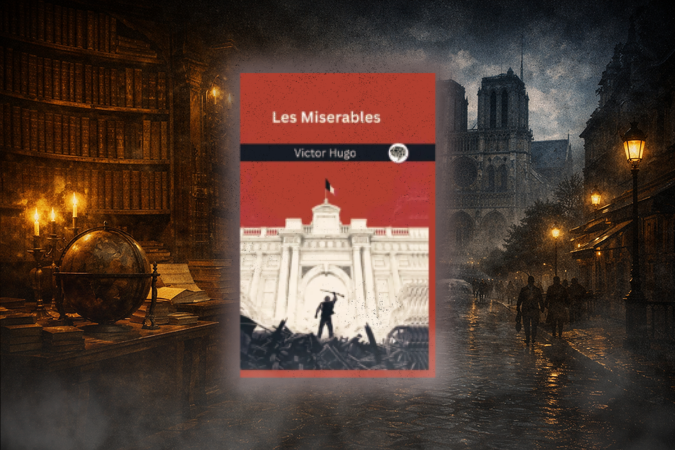
Always Hugo writes about the marginal – the prisoners, the poor, the outcast – and he grants them dignity, voice, complexity. Think of Jean Valjean of Les Miserables. He’s not just a character, he’s a moral argument in action, making readers wrestle with law vs. compassion. The real power of Victor Hugo is that he doesn’t just tell you stories, he makes you feel responsible for them.
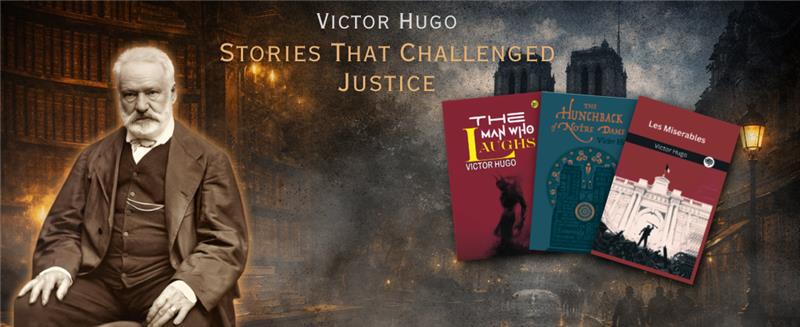
Hugo’s most famous novel, Les Misérables, is an epic story of redemption, justice and revolution. It tells the story of Jean Valjean, an ex-convict trying to forge a new life for himself, but pursued relentlessly by Inspector Javert.
The book examines morality, law, love and sacrifice on a grand scale in post-revolutionary France.It’s not a story. It’s an experience.
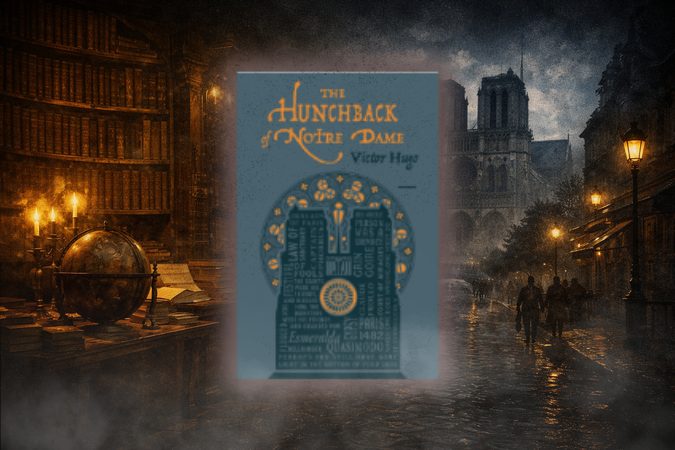
Hugo’s “The Hunchback of Notre-Dame” is a tragic tale taking place in medieval Paris. It revolves around Quasimodo, a bell ringer at Notre-Dame cathedral, who is shunned by society due to his ugly looks. Quasimodo loves Esmeralda, an innocent dancer loved by everyone. In this novel, Hugo touches upon topics such as love, solitude, brutality, and justice. The story also brings out the importance of Notre-Dame cathedral and society’s discrimination against individuals.
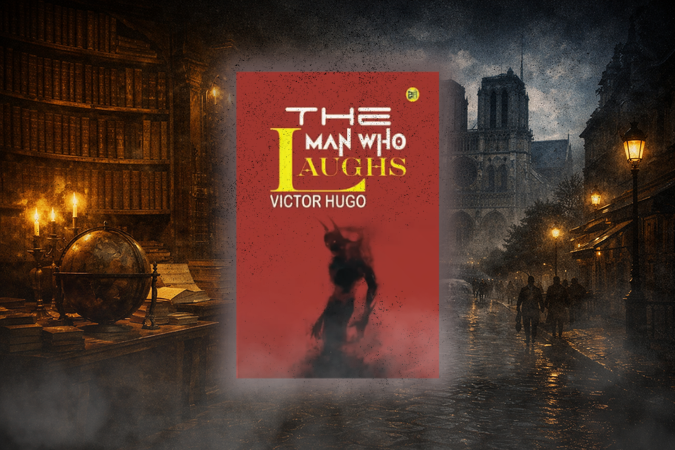
One of Hugo’s lesser-known but deeply powerful works, this novel follows Gwynplaine, a man disfigured to always appear as though he is smiling.
Through his story, Hugo critiques class divides, power structures, and the superficiality of society—making it as relevant today as it was in the 19th century.
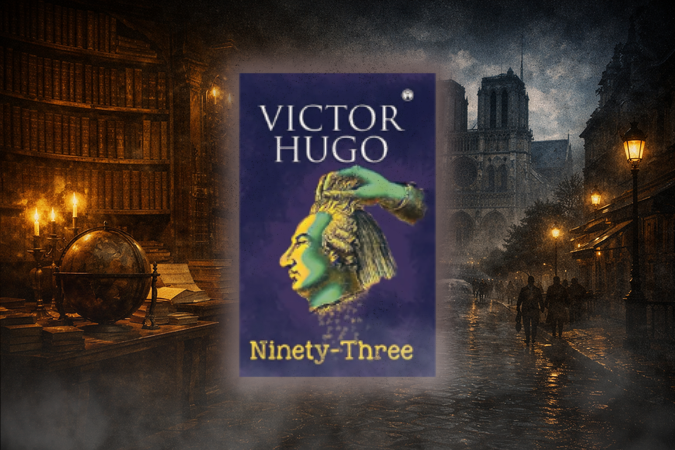
Based in the setting of the French Revolution, Ninety-Three becomes Hugo’s literary work depicting political disputes, allegiances, and ethical quandaries.
Herein emerges an enthralling story about revolutionaries and royalists which compels the reader to face the intricacies of ideologies and ethics.
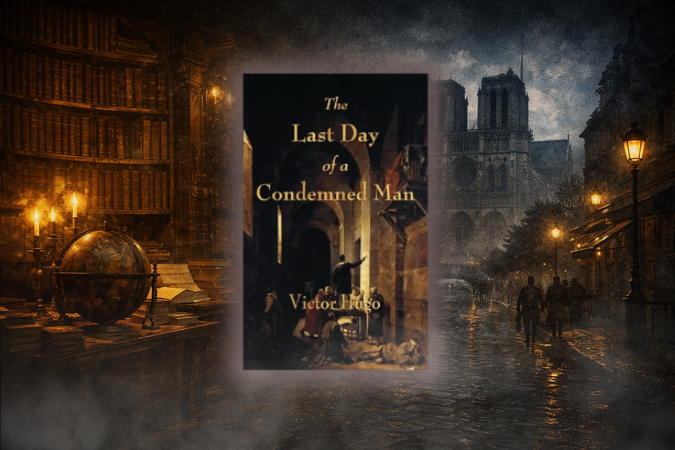
This is a brief but highly influential novel that tells the story from a first-person perspective of a man who is awaiting the execution.
Hugo makes use of this brilliant piece of writing in order to put across his opinion regarding the death penalty.
If you’re building a reading list that combines storytelling with substance, Victor Hugo deserves a place right at the top.