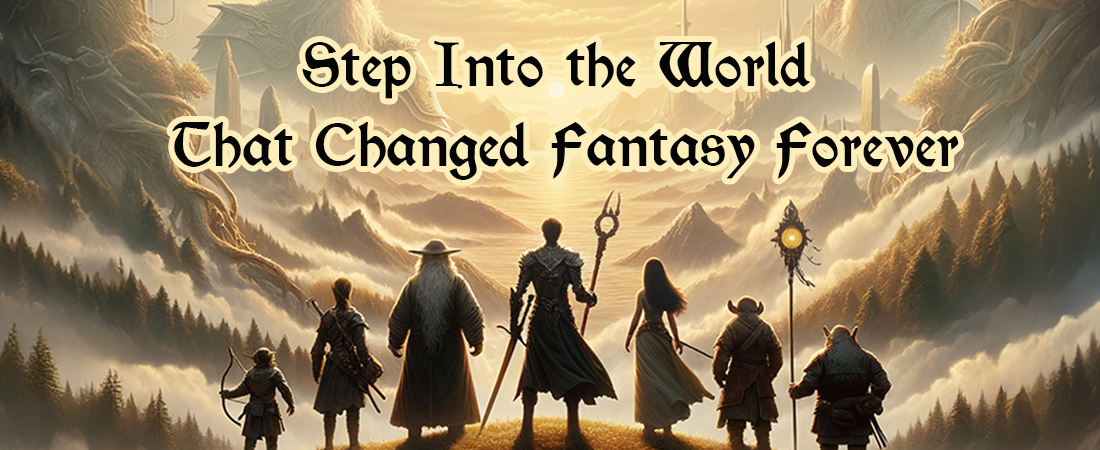
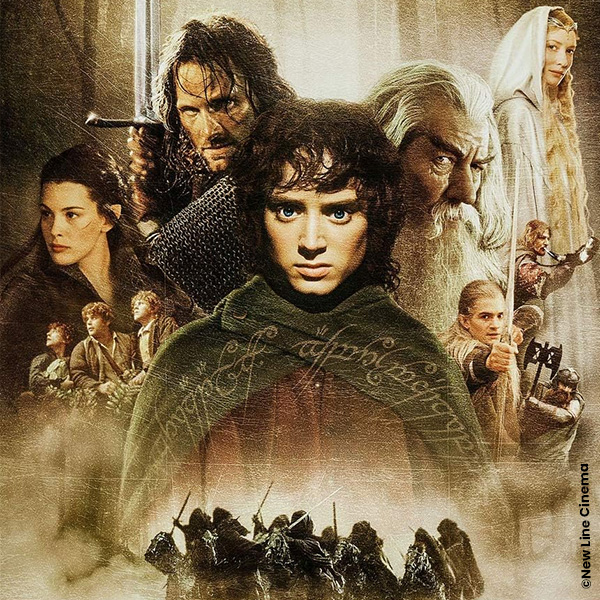




Few stories have achieved cult status quite like the . More than seven decades after their release, they’ve inspired an entire generation of readers, filmmakers, and cosplayers: shimmering Galadriel gowns, detailed Gandalf staffs and Aragorn’s weathered armour at Comic-Cons across the world. For fans of fantasy fiction and adventure, Tolkien’s epic is a rite of passage – a story that defines what it means to embark on a journey bigger than oneself.
Some stories find their audience and fade. Others burrow in so deep they become part of the culture — referenced, reimagined, cosplayed, argued over, and passed from one generation to the next like something almost sacred. Lord of the Rings books are very much the latter.
More than seven decades after Tolkien first published it, you’ll still find fans at Comic-Cons worldwide in painstakingly crafted Galadriel gowns and Aragorn’s weathered ranger armour, wielding Gandalf staffs they clearly spent far too long getting just right. The films brought a new wave of devotion. The books never stopped being loved. And somewhere out there, someone is always reading Fellowship of the Ring for the very first time, about to have their idea of what a story can be permanently expanded.
For fans of fantasy and adventure, Tolkien’s epic is less a recommendation and more a rite of passage — a story about what it means to set off on a journey far bigger than yourself, and somehow find that you were equal to it.
If you’ve seen the films, or simply grown up with the One Ring’s legend hovering at the edges of popular culture, here’s your invitation to go deeper. Into the books, the world, the characters, and the extraordinary mind that built all of it from scratch.
At the centre of the Lord of the Rings books is a deceptively simple premise: a small, unassuming hobbit named Frodo Baggins is handed the most dangerous object in the world and asked to destroy it.
The object in question is the One Ring — forged by the Dark Lord Sauron to control all other rings of power and, through them, the free peoples of Middle-earth. It is ancient, seductive, and corrupting. It has already destroyed greater people than Frodo. And the only place it can be unmade is deep in the heart of Mordor, Sauron’s own territory, surrounded by his armies.
Frodo doesn’t go alone. His steadfast friend Samwise Gamgee goes with him — arguably the true hero of the whole story, depending on who you ask — and along the way, a Fellowship forms: a dwarf, an elf, a wizard, two more hobbits, and the men who will become kings. Their quest is to give the world a fighting chance.
But The Lord of the Rings was never really just about the quest. Beneath the battles and the world-building, it’s a story about courage when you’re terrified, friendship under unbearable strain, the seductive weight of power, and the cost of carrying something that was never meant to be yours. Those themes don’t age. They never will.
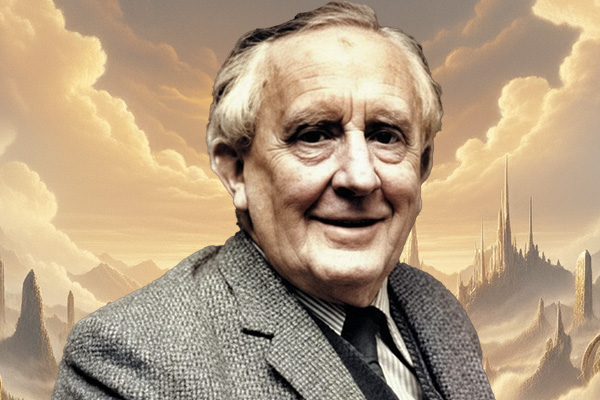
John Ronald Reuel Tolkien (1892–1973) was, on paper, an Oxford professor of Anglo-Saxon and English language and literature. In practice, he was quietly building one of the most detailed imaginary worlds ever committed to paper.
Born in South Africa and raised in England, Tolkien had an almost obsessive relationship with language from an early age. He didn’t just learn ancient languages, he invented new ones. Elvish isn’t a prop in his stories; it’s a fully realised linguistic system with its own grammar, history, and dialects. The maps of Middle-earth weren’t decorative either. They were the bones of a world he had been constructing for decades before a single reader ever saw them.
Middle-earth is, quite simply, one of the great achievements of human imagination. From the soft, sun-warmed hills of the Shire, where hobbits live in round-doored homes and the greatest adventure is an unexpected party, to the ancient elven sanctuary of Rivendell, the vast underground halls of Moria, and the ash-black plains of Mordor where nothing grows and everything is watched: every corner of this world feels inhabited, specific, and real in the way that only deeply loved places do.
The peoples of Middle-earth are as carefully drawn as the landscapes. The peace-loving, barefoot hobbits. The immortal, melancholy elves. The proud, stubborn dwarves. The fallible, valorous men. The ancient, unhurried Ents, who move through time on a completely different scale to everyone else. Each has their own history, their own loyalties, their own reason for being in the story.
Together, they don’t just populate a fantasy world. They make it feel like somewhere that existed long before you arrived, and will continue long after you leave, which is, perhaps, the highest compliment you can pay any writer’s imagination.
The main characters hail from a host of species and clans: the peace-loving Hobbits, immortal Elves, sturdy Dwarves, valorous Men, dark Orcs, and ethereal Ents, each with their own lore, loyalties, and landscapes. Together they create a world that feels ancient yet alive, one that continues to draw readers, gamers, and cosplayers back into its spell.
The Who’s Who in Middle-earth:
Frodo Baggins
A quiet, kind-hearted hobbit from the Shire who inherits the One Ring. Reluctant yet brave, Frodo becomes the unlikely hero destined to carry the Ring to Mordor and destroy it.
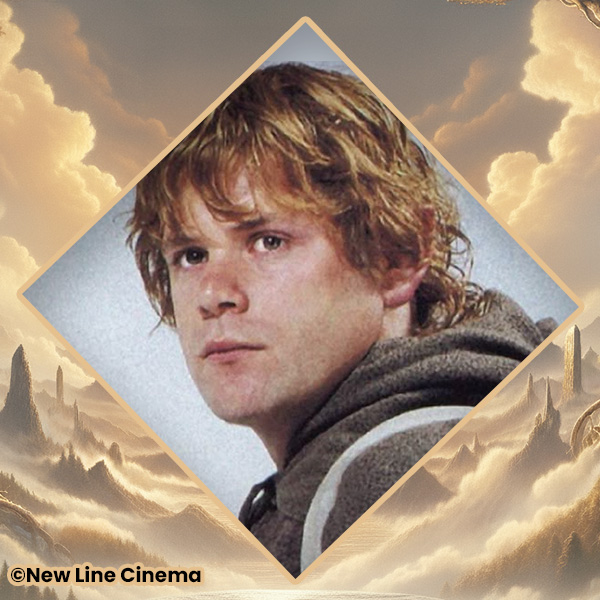
Samwise Gamgee
Frodo’s steadfast friend and companion on the quest. Loyal to a fault, Sam embodies courage, humility, and devotion, proving that even the smallest person can change the course of the future.
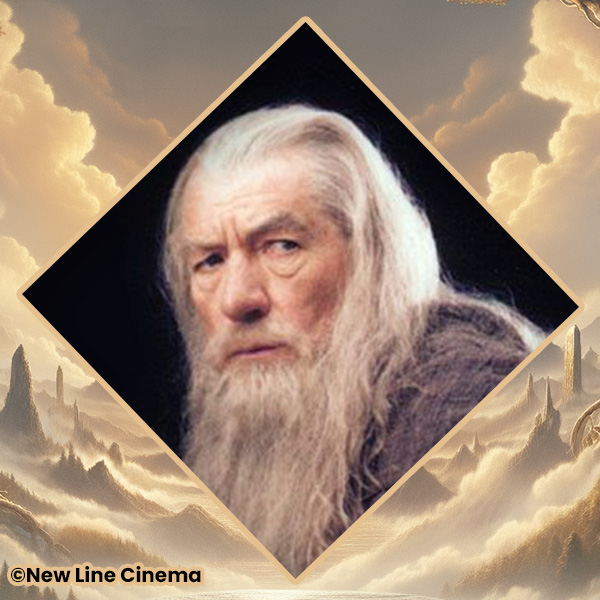
Gandalf
A wise and powerful wizard who leads the Fellowship. With his grey robes, commanding staff, and calm authority, he stands as the moral compass and protector of Middle-earth.
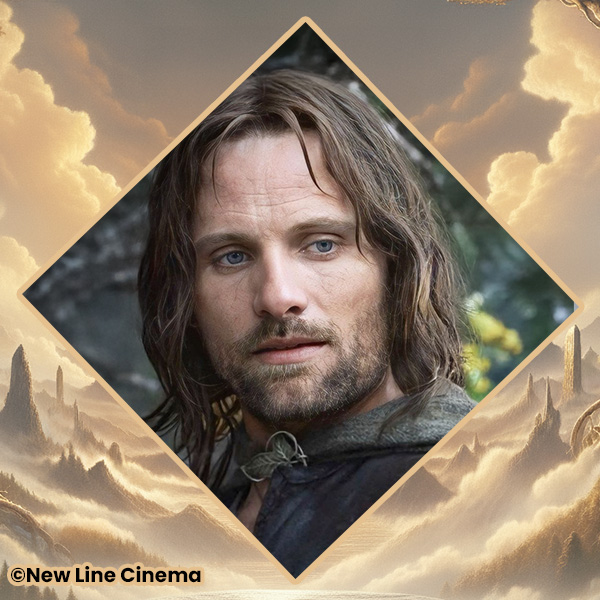
Aragorn
A noble ranger and heir to the throne of Gondor. He hides his royal heritage until duty calls him to lead men into battle and reclaim his destiny as king.
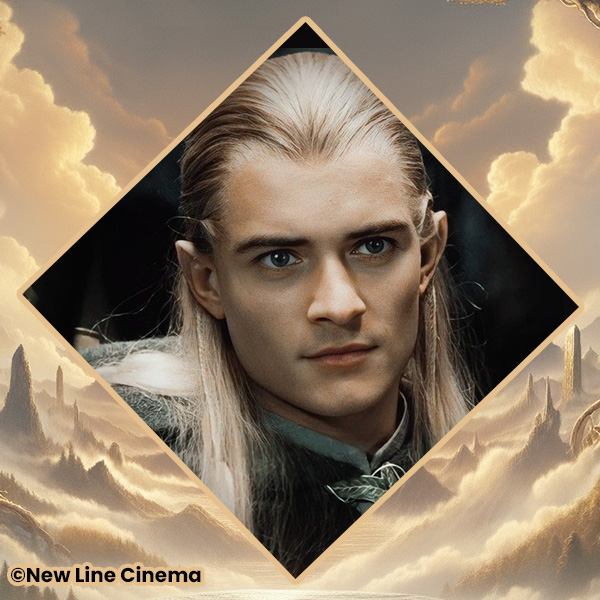
Legolas
The sharp-eyed Elven prince of Mirkwood, known for his archery skills, agility, and unshakeable composure. His friendship with the dwarf Gimli bridges old divides between their races.
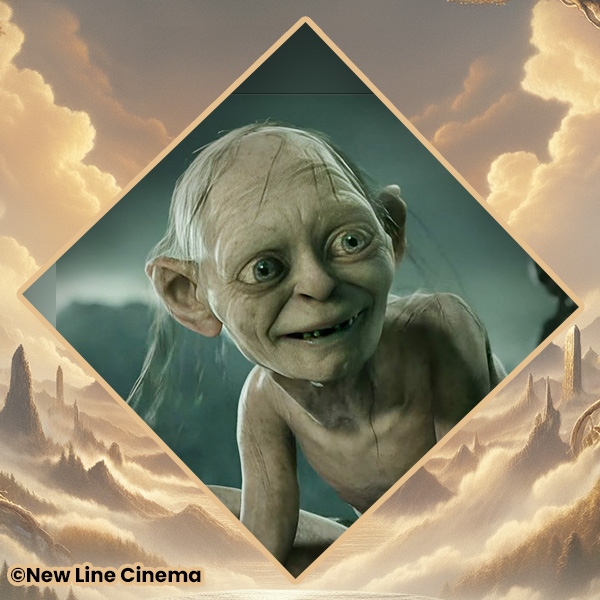
Gollum
Once a hobbit-like creature named Sméagol, Gollum is corrupted by the Ring’s dark magic. Torn between malice and remorse, he mirrors the destructive power of obsession.
Though often sold as a trilogy, The Lord of the Rings is technically one epic novel divided into three volumes:
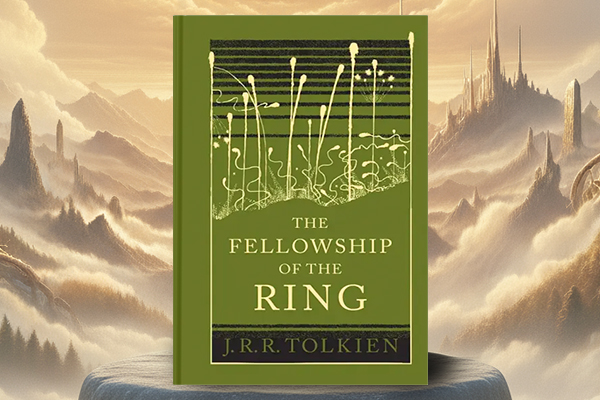
Book 1: The Fellowship of the Ring
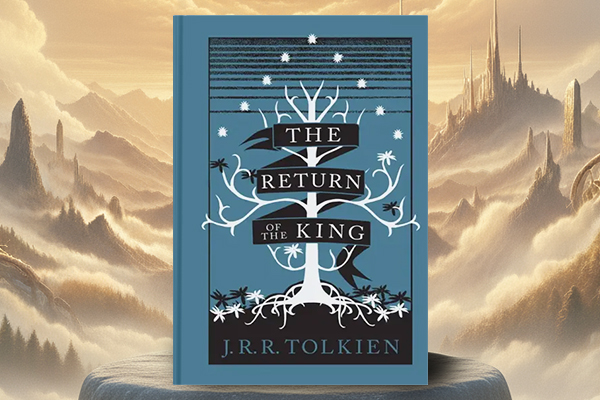
Book 3: The Return of the King
Each continues the same story – an unbroken journey from the Shire to Mordor and beyond.
It all begins in the peaceful Shire, where Frodo Baggins inherits the One Ring from his uncle Bilbo. When Gandalf reveals its dark secret, Frodo sets off to destroy it. Joined by Sam, Merry, Pippin, Aragorn, Legolas, Gimli, and Boromir, the Fellowship forms to carry the Ring to Mordor. But betrayal strikes and the group is torn apart. The book ends with Frodo and Sam continuing alone, setting the stage for darker trials ahead.
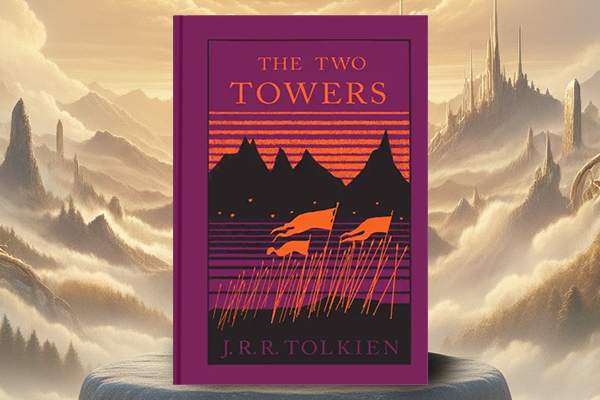
The story splits into two gripping arcs. Aragorn, Legolas, and Gimli chase after captured hobbits Merry and Pippin, who find unlikely allies among the ancient Ents. Meanwhile, Frodo and Sam, guided by the treacherous Gollum, inch closer to Mordor’s fiery heart. War brews as Rohan faces Saruman’s forces in the Battle of Helm’s Deep. By the end, hope flickers but doesn’t fade. The towers of Orthanc and Barad-dûr loom – and so does destiny.
The grand finale delivers everything: courage, heartbreak, and triumph. Aragorn rises as the true king, leading humanity’s last stand against Sauron. Frodo and Sam, exhausted yet resolute, reach Mount Doom with Gollum’s help and horror intertwined. When the Ring finally meets its fiery end, Middle-earth breathes again. The story closes where it began – in the Shire – but with a quiet melancholy, reminding us that even heroes must let go.
Because Tolkien built not just a plot but a parallel mythology. His intricate languages, poetic histories, and moral depth shaped the DNA of every fantasy saga that followed — from Game of Thrones by George R. R. Martin to The Witcher. The films by Peter Jackson further immortalised Middle-earth, turning its characters Frodo, Aragorn, Gandalf, and Gollum into household names.
Whether you first met them on screen or on the page, the Lord of the Rings series remains a reminder of why we read at all: to lose ourselves in a story larger than life.
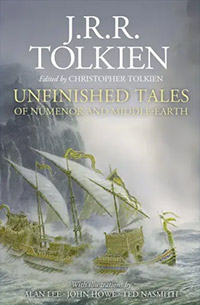
If you loved The Lord of the Rings, Tolkien’s wider Middle-earth legendarium is full of hidden gems. Dive into Tolkien’s other masterpieces that deepen the lore of his world.