
Your one-stop guide to all the NCERT books you need for Class 6 – 12, UPSC & NEET exams
In India, the National Council of Educational Research and Training (NCERT) stands as a cornerstone of academic development. What is NCERT? It is an Indian government body that develops school curricula and textbooks for Classes 1–12. Its books form the academic foundation for CBSE schools and are widely used for competitive exams like UPSC, NEET, and JEE. Since its establishment in 1961, NCERT has played a pivotal role in shaping the country’s educational framework by consistently providing high-quality resources that are essential for students across all levels, from primary to senior secondary.
NCERT books are renowned not only for their clarity and comprehensive coverage but also for their alignment with the national curriculum, making them indispensable for any student’s academic journey.
This article will serve as your ultimate guide to understanding:
- What NCERT is?
- Why is it vital to your academic journey?
- How can its resources empower you to achieve excellence?
NCERT is an autonomous organization under the Government of India, established with the primary goal of enhancing the quality of education in schools across the country. As a key entity, it is responsible for designing and developing textbooks, curricula, and educational materials that are widely adopted in schools affiliated with the Central Board of Secondary Education (CBSE) as well as various state boards.
Furthermore, NCERT’s role extends beyond the creation of textbooks. It conducts educational research, develops innovative teaching methodologies, and provides training for teachers, all of which are crucial in ensuring that the education system continuously evolves to meet the changing needs of students and society. Additionally, its resources, particularly the NCERT textbooks, are highly regarded for their ability to present complex concepts in an accessible and engaging manner, making them indispensable for students who aim to build a strong academic foundation.
A1. NCERT books are standard textbooks designed for school education in India. They are important because they provide clear concepts and follow the prescribed curriculum.
A2. Yes, NCERT books are generally compulsory for CBSE students. They are the primary source recommended by CBSE for exam preparation.
A3. Yes, students from other boards can use NCERT books for preparation. They are useful for building strong fundamentals across subjects.
A4. NCERT stands for National Council of Educational Research and Training. It develops curriculum, textbooks, and educational resources for schools.
A5. CBSE schools use NCERT books because they align with the official syllabus. They ensure consistency in learning and exam preparation.
- Simplicity and Clarity: The language used in NCERTs is straightforward, making complex topics easier to understand.
- Authenticity: NCERTs are published by the Government of India, ensuring reliable and factual information.
- Foundation Building: They provide a strong base for understanding advanced reference books and materials.
- Frequently Asked in Exams: Many direct questions in the UPSC prelims and mains are based on NCERT content.
- Start with Basics: Begin with Class 6-10 books to grasp fundamental concepts.
- Focus on Class 11-12: These books provide in-depth knowledge on key subjects.
- Regular Revision: Consistently revise the NCERTs to retain concepts.
- Make Notes: Highlight important points and create concise notes for quick revisions.
- Link with Current Affairs: Try to connect NCERT content with current events to enhance your understanding.
NCERT books are widely regarded as the best study material for NEET (National Eligibility cum Entrance Test) for several reasons:
- Alignment with NEET Syllabus
- NCERT books are designed to align closely with the NEET syllabus, covering all the essential topics in Biology, Chemistry, and Physics. The content is streamlined to focus on the core concepts that are frequently tested in the exam.
- For Biology, nearly 80-85% of the NEET questions are directly or indirectly based on the content of NCERT books, making them indispensable for preparation.
- Clarity and Simplicity
- The language used in NCERT books is simple and easy to understand, making complex concepts accessible to students. This clarity helps in building a strong foundational understanding of subjects, which is crucial for solving NEET questions effectively.
- The straightforward explanations make it easier for students to grasp fundamental concepts, which can then be applied to more advanced problems and questions.
- Comprehensive Coverage of Basics
- NCERT books provide a thorough explanation of basic concepts, ensuring that students have a solid grounding in the fundamentals. This is essential for NEET, where a deep understanding of basic principles is required to tackle tricky and application-based questions.
- For example, in Chemistry, the NCERT books offer a detailed breakdown of concepts such as chemical bonding, thermodynamics, and organic chemistry, all of which are critical for NEET.
- Diagrams and Illustrations
- The diagrams and illustrations in NCERT books are precise and well-labeled, aiding in visual learning. For NEET Biology, where diagram-based questions are common, this feature is particularly useful.
- Students are often tested on their ability to interpret and analyze diagrams, making the NCERT book’s visuals a vital study tool.
- Consistency in Examination Patterns
- Over the years, NEET has consistently drawn many of its questions from NCERT books, particularly in Biology. This trend has made NCERT books the go-to resource for NEET aspirants.
- By mastering NCERT content, students can ensure they are well-prepared for the types of questions that are most likely to appear in the exam.
- Exercises and Exemplars
- The exercises at the end of each chapter in NCERT books are crafted to reinforce the concepts learned. Working through these exercises helps students practice application-based learning, which is essential for NEET.
- Additionally, the NCERT Exemplar problems offer higher-level questions that challenge students and prepare them for the toughest questions in NEET.
- Reference Material for Advanced Study
- While NCERT books form the foundation of NEET preparation, they also serve as a reference point for more advanced study materials. Many coaching institutes and reference books use NCERT content as a base before delving into more complex problems.
- For subjects like Physics, where problems can be more challenging, NCERT provides the fundamental understanding needed to tackle advanced questions.
Fundamental Concepts
- Cell Biology: Structure and function of cell organelles, cell cycle, and division (mitosis and meiosis).
- Genetics: Mendelian genetics, chromosomal theory of inheritance, gene expression, and regulation.
- Ecology: Ecosystem dynamics, energy flow, population interactions, and conservation.
- Human Physiology: Digestive, circulatory, respiratory, excretory, nervous, and endocrine systems.
- Plant Physiology: Photosynthesis, respiration, transpiration, mineral nutrition, and plant growth hormones.
- Evolution: Theories of evolution, evidence, and evolutionary biology.
Advanced Concepts
- Molecular Biology: DNA replication, transcription, translation, and genetic code.
- Biotechnology: Genetic engineering, cloning, recombinant DNA technology, and its applications.
- Advanced Genetics: Linkage, crossing over, sex-linked inheritance, and human genetics.
- Applied Biology: Human health and diseases, immunity, reproductive health, and emerging pathogens.
- Mole Concept: Stoichiometry, balancing chemical equations, and calculations involving moles.
- Atomic Structure: Quantum numbers, electron configuration, and periodic properties.
- Chemical Bonding: VSEPR theory, hybridization, molecular orbital theory, and types of bonding.
- Thermodynamics: First and second laws, enthalpy, entropy, Gibbs free energy, and spontaneity.
- Equilibrium: Le Chatelier’s principle, acid-base equilibrium, solubility product, and buffer solutions.
- Organic Chemistry: Nomenclature, isomerism, and basic reaction mechanisms (substitution, addition, elimination).
- Coordination Chemistry: Ligand field theory, crystal field theory, and color and magnetic properties.
- Electrochemistry: Nernst equation, electrochemical cells, conductance, and electrolysis.
- Kinetics: Rate laws, reaction order, activation energy, and mechanisms.
- Advanced Organic Chemistry: Named reactions (Aldol, Cannizzaro, Friedel-Crafts), stereochemistry, and biomolecules.
- Polymers and Biomolecules: Structure and properties of polymers, proteins, carbohydrates, nucleic acids, and lipids.
- Mechanics: Newton’s laws, work-energy theorem, rotational motion, gravitation, and fluid mechanics.
- Thermodynamics: Laws of thermodynamics, kinetic theory, and heat engines.
- Electromagnetism: Coulomb’s law, Gauss’s law, Ampere’s law, Faraday’s law, and Lenz’s law.
- Optics: Reflection, refraction, lens formula, optical instruments, and wave optics.
- Waves and Oscillations: Simple harmonic motion, wave equation, sound waves, and Doppler effect.
- Modern Physics: Photoelectric effect, atomic models, and nuclear physics.
- Electrochemistry: Maxwell’s equations, electromagnetic waves, and AC circuits.
- Quantum Mechanics: Wave-particle duality, uncertainty principle, and basics of quantum theory.
- Relativity: Special theory of relativity, time dilation, length contraction, and mass-energy equivalence.
- Thermal Physics: Advanced concepts in thermal expansion, heat transfer, and black body radiation.
- Advanced Mechanics:Rigid body dynamics, elasticity, and fluid dynamics.
For students across India, NCERT textbooks are the best resources for a solid academic foundation. The books – designed by experts and recommended by educators – are aligned with the CBSE curriculum.
Whether you’re a Class 6 student getting serious about your academic pursuits or a Class 12 student preparing for competitive exams, NCERT books are your go-to study partners.
From foundational learning in Class 6-10 to advanced concepts in Class 11-12, these books are designed to ensure that students are well-prepared for their board exams and future academic careers.
NCERT Books for Class 6 cover the foundational concepts across various subjects, including Mathematics, Science, Social Science, and Languages. These books are designed to introduce students to essential topics, ensuring a smooth transition from elementary to middle school education.
NCERT Books for Class 7 build on the knowledge gained in Class 6, introducing more complex concepts while maintaining a student-friendly approach.
Class 8 NCERT books delve deeper into the subjects, preparing students for higher secondary education by introducing them to advanced topics.
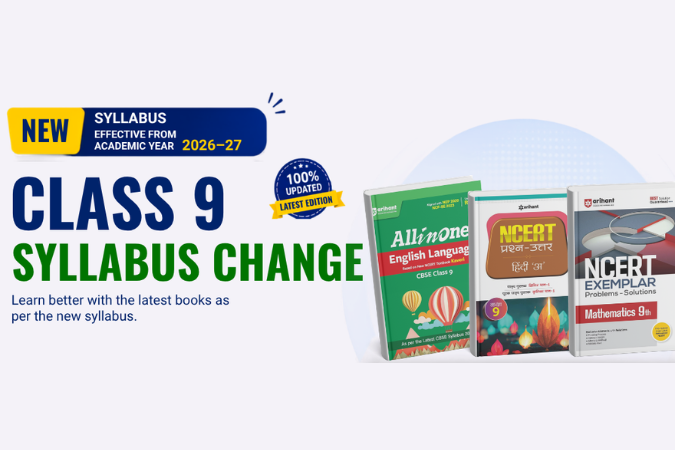
Class 9 NCERT books are crucial as they form the basis for the Class 10 board exams. The books cover a broad range of topics with a greater focus on detail and analysis.
NCERT Books for Class 10 are critical as they prepare students for board exams. The content is comprehensive, covering all the necessary topics in detail.
Class 11 NCERT books introduce students to specialized subjects, laying the groundwork for Class 12 and competitive exams like JEE, NEET, and UPSC.
NCERT Books for Class 12 are crucial for board exams and competitive exams. They provide an in-depth understanding of advanced concepts across all subjects.
- Visit Bookscape.com
- Search for “NCERT textbooks”
- Select your Class and Subject
- Add the books to your cart and proceed to checkout
- Or simply CLICK HERE to browse all NCERT books