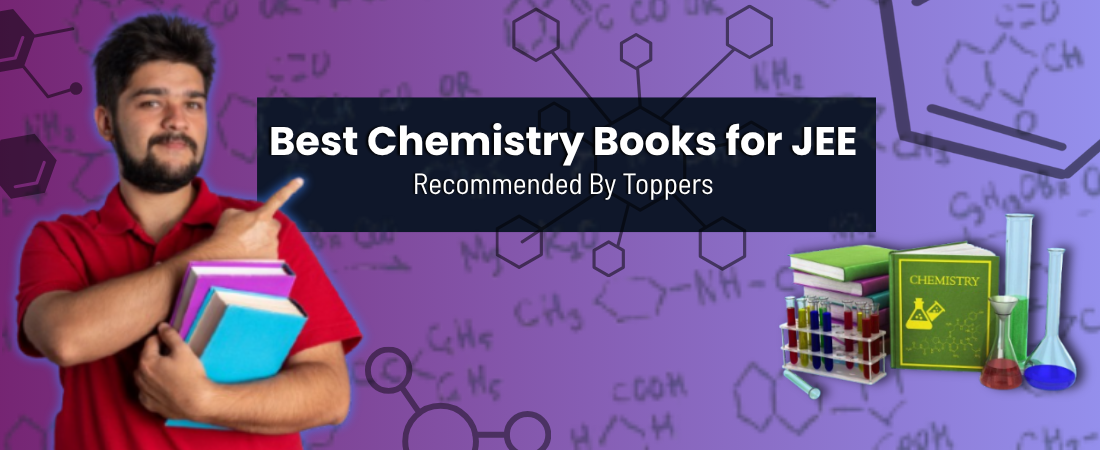
Chemistry can be a scoring subject in JEE—if approached correctly. The real challenge isn’t just studying hard but choosing the best chemistry book for JEE that aligns with the exam pattern and your preparation level.
Toppers don’t rely on dozens of resources. Instead, they stick to a focused set of books that help them build concepts, practice effectively, and master previous year questions.
In this guide, you’ll find books recommended by IIT toppers for chemistry, along with a clear strategy on how to use them for JEE Main and Advanced 2026.
Which Is the Best Chemistry Book for JEE?
There is no single “perfect” book. Chemistry in JEE is divided into three parts:
- Physical Chemistry
- Organic Chemistry
- Inorganic Chemistry
Each requires a slightly different approach—and different types of books.
Best Books for Physical Chemistry
Concept + Practice
- PW EaJEE Handwritten Notes for Physical Chemistry (Faisal Razaq)
- Covers complete syllabus
- Includes 1200+ questions
- Strong focus on numerical and clarity
Why This Works
Physical Chemistry is calculation heavy. Toppers prefer resources that:
- Build formula understanding
- Provide structured problem-solving
- Offer gradual difficulty progression
Best Books for Organic Chemistry
Concept Mastery
- PW EaJEE Organic Chemistry (Rohit Sir & SKC Sir)
- Clear explanation of reactions
- Includes practice questions and PYQs
Advanced Understanding
- PW Mechanism Mantra (Pankaj Sir)
- Focuses on reaction mechanisms
- Helps in solving complex problems
Why This Works
Organic Chemistry is logic-based. Instead of memorizing, toppers focus on:
- Reaction mechanisms
- Pattern recognition
- Application-based questions
Best Books for Inorganic Chemistry
NCERT + Reinforcement
Practice + Revision
Why This Works
Inorganic Chemistry is memory driven. The best strategy is:
- Strong NCERT reading
- Regular revision
- Practice-based reinforcement
Best PYQ Books for Chemistry
Must-Have for Exam Pattern
Why PYQs Are Critical
- Show actual exam trends
- Help identify important topics
- Improve time management
Toppers often solve PYQs multiple times before the exam.
How to Choose the Best Chemistry Book for JEE
1. Focus on Quality, Not Quantity
Using too many books leads to confusion. Stick to:
- 1 book per section
- 1 PYQ resource
2. Match the Book to Your Level
- Beginner → Handwritten notes + basics
- Intermediate → Practice-heavy books
- Advanced → PYQs + revision
3. Prioritize Revision
Chemistry requires repeated exposure. Without revision, retention drops quickly.
Preparation Strategy Using These Books
Step-by-Step Plan
- Start with NCERT (especially for Inorganic)
- Use handwritten notes for concept clarity
- Practice questions daily (Physical + Organic)
- Solve PYQs chapter-wise
- Revise weekly and monthly
Pro Tip
Allocate:
- 40% time → Concepts
- 40% time → Practice
- 20% time → Revision
Common Mistakes to Avoid
- Ignoring NCERT for Inorganic Chemistry
- Memorizing Organic reactions without understanding
- Skipping PYQs
- Using too many resources
FAQs
1. Which is the best chemistry book for JEE Main?
A combination of NCERT, PW handwritten notes, and PYQ books like PW or MTG is considered the best approach.
2. Is NCERT enough for JEE Chemistry?
For Inorganic, largely yes. For Physical and Organic, additional practice is necessary.
3. How many books should I use for Chemistry?
Ideally 3–4:
- One per section
- One PYQ book
4. Are PYQs enough for Chemistry preparation?
PYQs are essential but should be combined with concept-building resources.
5. Which part of Chemistry is most scoring in JEE Main?
Inorganic and Physical Chemistry are generally more scoring due to direct and formula-based questions.