
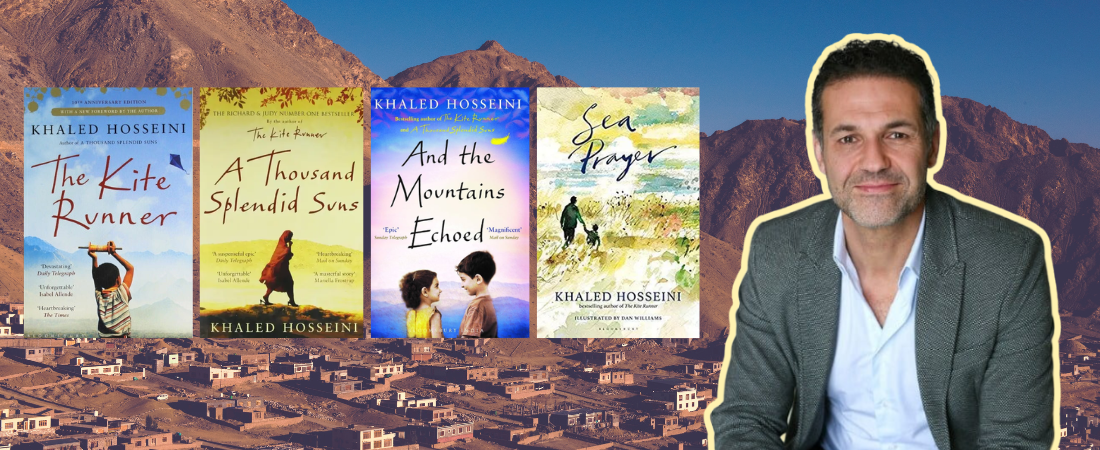
Some writers find an audience. Others find something rarer — a place in people’s lives that outlasts the reading of the book itself. Khaled Hosseini is firmly in the second category.
His novels have sold over 40 million copies across more than 70 countries, but the numbers, impressive as they are, don’t quite capture what’s really happened. Readers don’t just buy his books — they press them into the hands of friends, assign them in classrooms, return to them years later and find something new waiting. The Kite Runner alone has become one of those rare novels that entire generations share as a kind of common emotional reference point.
If you’ve been meaning to read him and haven’t yet, or if you’re wondering where to begin, here’s everything you need to know.
Who Is Khaled Hosseini?
Hosseini was born in Kabul in 1965, into a family where culture and language were central to daily life: his father was a diplomat, his mother a teacher of Farsi and history. By his own account, storytelling was in the air from early childhood.

In 1976, the family moved to Paris. Then Afghanistan changed catastrophically — political upheaval, Soviet invasion, a country that was no longer safe to return to. The Hosseinis sought asylum in the United States and eventually settled in San Jose, California, where Hosseini grew up, went to school, studied medicine at the University of California, San Diego, and spent years working as an internist in Los Angeles.
In March 2001, still practising as a doctor, he began writing in whatever time he could find. That manuscript became The Kite Runner, published in 2003. The rest is, not to overstate it, publishing history.
Today, alongside his writing, Hosseini serves as a Goodwill Envoy for the UNHCR and runs The Khaled Hosseini Foundation, which provides humanitarian aid to vulnerable families in Afghanistan — work born directly from what he witnessed on visits back to the country he left as a child. His life, in many ways, is a version of the stories he tells: shaped by exile, held together by identity, and quietly insistent on hope.
Why Is Khaled Hosseini Famous?
When The Kite Runner appeared in 2003, it did something that war-weary news coverage of Afghanistan simply couldn’t: it made people feel the country rather than just observe it from a distance. Instead of headlines, Hosseini gave readers friendships, betrayals, fathers and sons, the specific weight of guilt carried across decades and continents. Afghanistan became, for millions of readers, not an abstract geopolitical concept but a place with streets, kite-filled skies, and complicated human hearts.
A Thousand Splendid Suns deepened that response — bringing the experiences of Afghan women to the centre in a way that was both unflinching and deeply compassionate — and secured his place in contemporary literature beyond any doubt.
What makes Hosseini’s work endure isn’t just the subject matter, though that clearly matters. It’s that he writes literary fiction with the emotional directness of someone who genuinely needs you to understand. His prose is clear, his stories are accessible, and yet what they leave behind is anything but simple. That combination — profound without being impenetrable, heartbreaking without being manipulative — is harder to achieve than it looks, and it’s why critics and casual readers tend to land in exactly the same place: moved, and reluctant to let go.
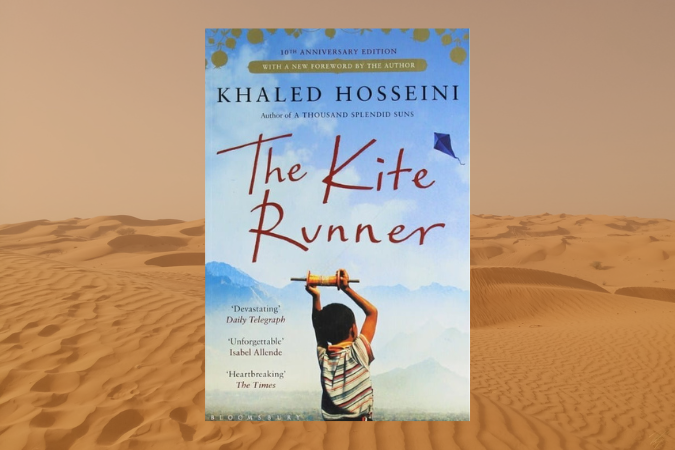
No discussion of Khaled Hosseini books is complete without The Kite Runner. The novel follows Amir, a privileged boy from Kabul, and Hassan, the son of his father’s servant. Their friendship is tested by betrayal during a local kite-flying tournament. Years later, after fleeing to America during Afghanistan’s political turmoil, Amir is called back to confront his past. The story spans decades and continents, examining guilt, redemption, and fractured loyalty. It remains one of the most widely assigned modern novels in schools worldwide.
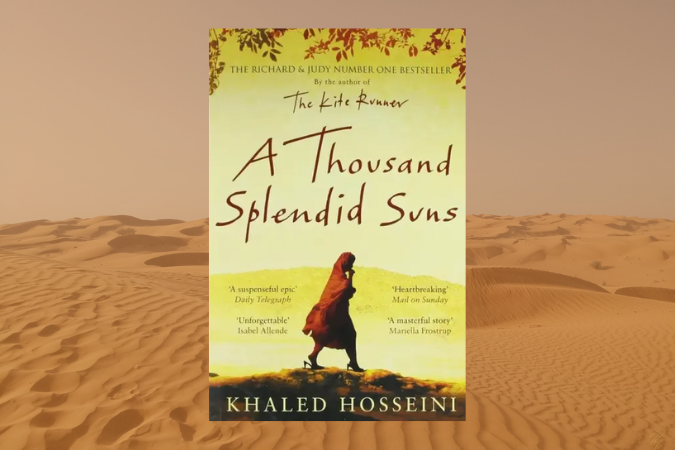
This novel shifts the focus to women’s lives in Afghanistan. It follows Mariam and Laila, two women in Kabul brought together by circumstance and an abusive husband. Although they begin as strangers, shared hardship binds them into a profound sisterhood. Set against the backdrop of Soviet occupation, civil war, and Taliban rule, the book highlights resilience amid brutality. It is deeply moving, yet never sentimental. Consequently, many readers consider it among Khaled Hosseini’s best books for its portrayal of courage and female solidarity.
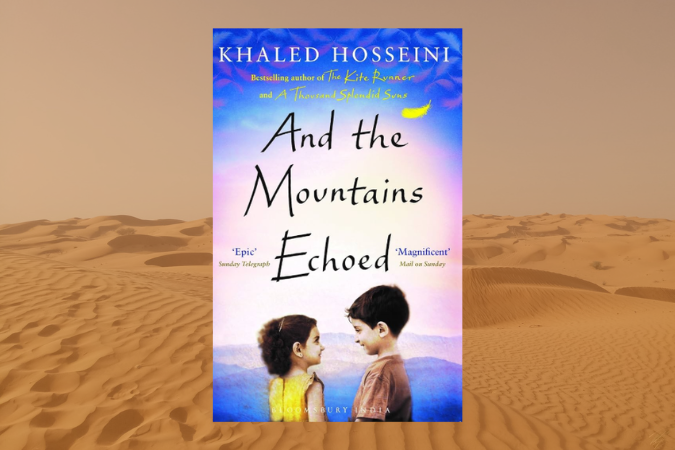
And the Mountains Echoed expands Hosseini’s canvas. The story begins with Abdullah and his little sister Pari in the village of Shadbagh, Afghanistan. When poverty forces their father to make an unimaginable decision, the siblings’ lives are permanently altered. From Kabul to Paris, San Francisco, and the Greek island of Tinos, the narrative traces how one choice echoes across generations. Each chapter introduces interconnected characters whose lives intersect in surprising ways. It is ambitious, layered, and emotionally complex, making it one of the most interesting contemporary literary novels.
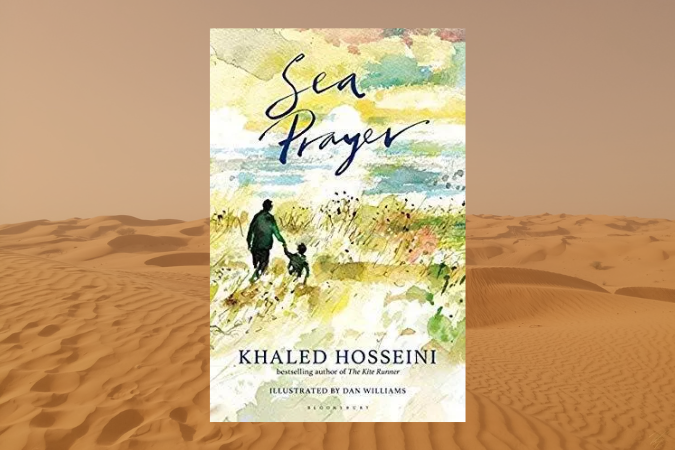
Unlike his previous novels, Sea Prayer is a short, illustrated book written in the form of a letter from a father to his young son. On the eve of a dangerous sea journey, the father reflects on their life in Homs, Syria, before war destroyed it. Inspired by the tragic image of Syrian child Alan Kurdi, who drowned in the Mediterranean Sea while trying to reach safety in Europe, the book addresses the refugee crisis with quiet intensity. Though brief, it carries immense emotional weight. Notably, Hosseini donates author proceeds from the book to UNHCR and his foundation to support refugee families.
Why Readers Keep Returning to Khaled Hosseini Books
So, why do Khaled Hosseini books continue to dominate reading lists years after publication? Because they are emotionally honest; they humanise geopolitical conflict; and they are deeply readable.
For new readers seeking thoughtful book recommendations, Hosseini offers stories that are intense yet accessible. Meanwhile, seasoned readers often revisit his novels for the depth they discover on second reading.
Legacy and Impact
Over time, Hosseini’s legacy has grown beyond fiction. Through his work with UNHCR and his foundation, he supports refugees worldwide. Additionally, proceeds from certain projects directly fund humanitarian relief.
As a result, Khaled Hosseini books are not just stories. They are conversations about empathy and responsibility. For readers seeking meaningful book recommendations, his novels remain powerful entry points into global literature.