
Plot, Meaning, and Modern Appeal
The 19th century was a remarkable moment for literature, and Russia, perhaps more than anywhere else, was where storytelling went somewhere genuinely new. Leo Tolstoy was mapping the sweep of human history in War and Peace. Anton Chekhov was finding tragedy in the quietly ordinary. Fyodor Dostoyevsky was doing something else entirely: reaching into the darkest corners of the human mind and finding, somehow, both horror and compassion there.
But before all of that — before Crime and Punishment, before The Brothers Karamazov — there was White Nights. Shorter, softer, and surprisingly tender, it’s a side of Dostoyevsky that even many of his fans haven’t discovered. And recently, thanks to a wave of Instagram posts and BookTok videos, an entirely new generation has found it and fallen quietly in love with it.
If you’re new to Russian literature, or just curious about what all the fuss is about, here’s everything you need to know.
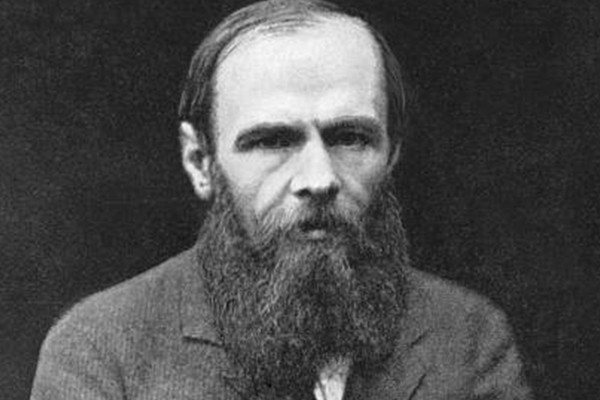
Fyodor Mikhailovich Dostoyevsky (1821–1881) lived one of the more extraordinary lives in literary history — and that’s saying something, given the competition.
Born in Moscow to a middle-class family, he grew up near the hospital where his father worked as a doctor. Early and repeated exposure to poverty and suffering left a permanent imprint on how he saw people, and it shows in everything he ever wrote. He studied engineering, as one did, and then promptly abandoned a sensible career the moment literature came calling. His debut novel, Poor Folk (1846), announced him as a major new voice almost immediately.
Then things got complicated. He was arrested for being part of a discussion group deemed anti-government — the kind of charge that, in 19th-century Russia, carried genuinely terrifying consequences. He came within moments of execution before his sentence was commuted to four years of exile in Siberia. It’s the sort of experience that either breaks a person or reshapes them entirely. For Dostoyevsky, it did the latter.
When he returned to St. Petersburg, he wrote with a new kind of urgency — morally restless, psychologically fearless, endlessly curious about the worst and best of what people are capable of. Debt, illness, and personal loss followed him throughout his life, and somehow all of it found its way onto the page.
His name has become shorthand for a particular kind of fiction: morally complex, psychologically intense, impossible to put down. But White Nights, written before the hardest years had fully arrived, shows another version of him — the dreamer, the romantic, the young writer who still believed wholeheartedly in the redemptive power of human connection.
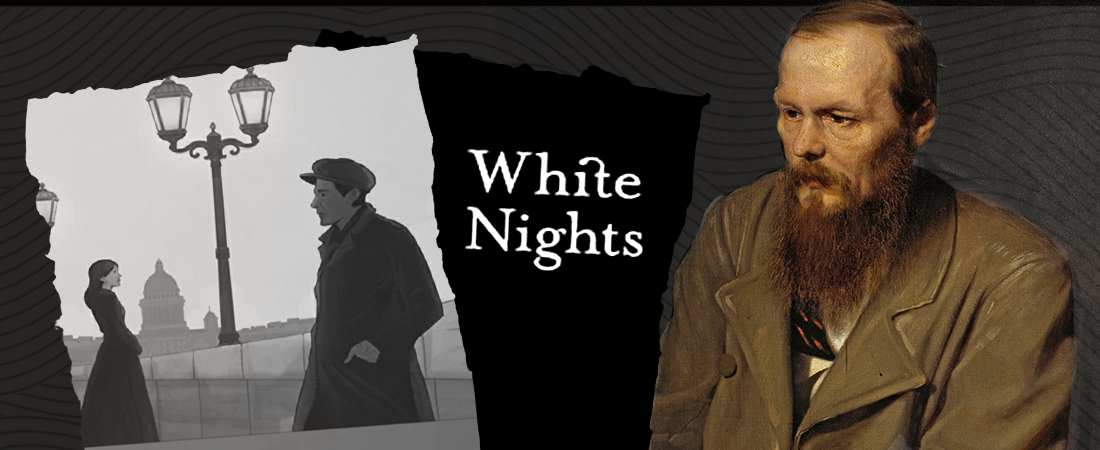
First published in 1848, White Nights is a slim novella — Dostoyevsky himself called it a “sentimental novella” — set in St. Petersburg during those strange, luminous summer nights when the sky never quite goes dark.
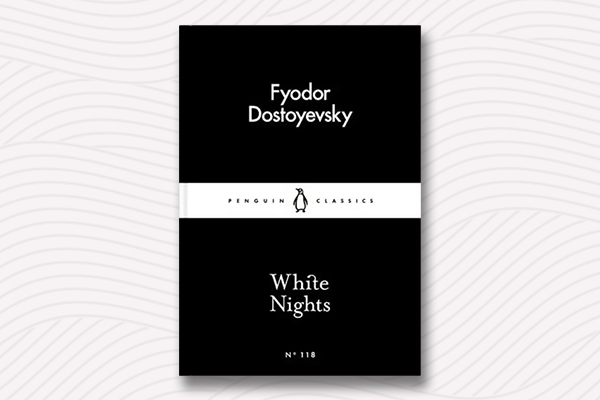
Plot Summary and Characters
The story belongs to a young man known only as the Dreamer. He is shy, solitary, and deeply interior — the kind of person who has rich conversations in his head and very few in real life. His world changes one evening when he stumbles upon a young woman named Nastenka crying alone by a canal. He helps her. They begin to meet every night.
Over four evenings and one final morning, they talk the way people rarely get to talk — openly, honestly, without pretence. Nastenka confides that she’s waiting for someone: a man she loves who promised to come back but hasn’t. The Dreamer listens, and falls for her anyway, even knowing the odds. Their connection is brief, beautiful, and painfully uneven.
The ending — when the Dreamer’s carefully constructed illusions finally give way — is one of the most quietly devastating moments in all of Dostoyevsky’s writing. Not dramatic, not violent. Just the particular sadness of someone who hoped, and understood too late.
Why It Is Worth Reading
At just under 60 pages, White Nights is one of Dostoyevsky’s shortest works, making it a perfect entry point into Russian literature. His writing here is poetic, introspective, and deeply emotional. The tone is tender rather than tragic. The dialogue feels intimate, almost cinematic, revealing Dostoyevsky’s early fascination with human psychology.
The novella belongs to the Romantic genre, focusing on idealised love, loneliness, and the pain of unfulfilled dreams. It lacks the philosophical density of Crime and Punishment, but its emotional resonance is timeless.
Reception and Legacy
At under 60 pages, White Nights is one of the most accessible entry points into Russian literature there is. The writing is poetic and unhurried, the dialogue intimate almost to the point of feeling overheard. There’s none of the philosophical density that can make Crime and Punishment feel like a workout — just two people, a handful of nights, and a connection that means everything to one of them and not quite enough to the other.
Its themes — loneliness, yearning, the particular pain of loving someone who can’t love you back the same way — are as recognisable now as they were in 1848. Which is perhaps why short quotes from the novella have been circulating on Instagram and BookTok recently, resonating with readers who’ve never picked up a Dostoyevsky before. Lines about dreaming, about real life feeling just out of reach, about love as something you hold briefly and then let go — they hit differently in the age of parasocial connection and digital intimacy.
How It Compares to Dostoyevsky’s Other Books
Think of it this way: if Crime and Punishment is about guilt, and The Brothers Karamazov is about faith, White Nights is about innocence — what it feels like before life has had a chance to complicate everything.
It’s softer than his later work, written by someone who hadn’t yet been fully worn down by the world. But even here, you can sense what he was becoming. The empathy is already there. The interest in people who exist on the margins — the lonely, the overlooked, the quietly desperate — is already fully formed. White Nights isn’t just a charming footnote to a great career. It’s where it all began.
Books Like White Nights That May Interest You
If you love White Nights, and are looking for similar books from Russian literature with themes of love or loneliness, you may enjoy:
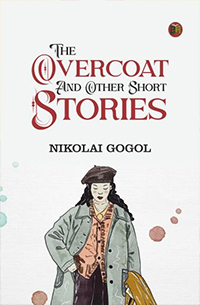
Another short, haunting story about loneliness and longing.
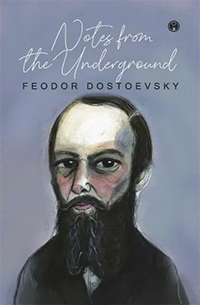
A darker, philosophical twin to White Nights.
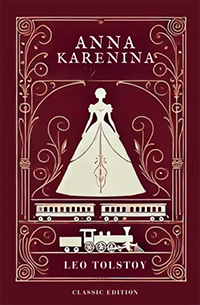
Exploring love and loss in 19th-century Russia.
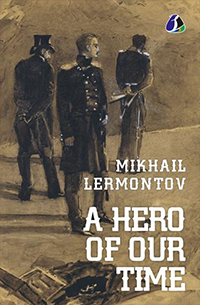
A Romantic classic with a Byronic anti-hero.
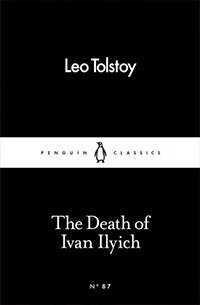
Suitable for readers drawn to existential themes.
Why You Should Read White Nights Today
Because it’s short, heartfelt, and timeless. White Nights by Fyodor Dostoyevsky reminds us that even brief encounters can change us forever. It’s a book that captures the ache of being human, a theme as relevant in 1848 as it is in 2025.
If you’ve always wanted to explore Russian literature but felt intimidated by its density, start here. It’s Dostoyevsky at his most accessible and his most emotional.
FAQ
1. What are the top 10 classic books to read?
If you’re building your classic literature collection, start with these timeless reads:
- War and Peace by Leo Tolstoy
- Crime and Punishment by Fyodor Dostoyevsky
- Pride and Prejudice by Jane Austen
- The Brothers Karamazov by Fyodor Dostoyevsky
- Jane Eyre by Charlotte Brontë
- The Great Gatsby by F. Scott Fitzgerald
- Wuthering Heights by Emily Brontë
- Anna Karenina by Leo Tolstoy
- 1984 by George Orwell
- The Picture of Dorian Gray by Oscar Wilde
These masterpieces continue to inspire generations and are excellent entry points into world classics and Russian literature alike.
2. What is the shortest book by Dostoyevsky?
White Nights is one of Fyodor Dostoyevsky’s shortest and most accessible works. At under 60 pages, it’s a novella rather than a full-length novel—perfect for readers who want to experience Dostoyevsky’s emotional depth and storytelling brilliance without diving into his heavier tomes like Crime and Punishment or The Brothers Karamazov.
3. Who are the main characters in White Nights?
The story centres on two characters:
- The Dreamer – a lonely, introspective man who lives in his imagination and yearns for connection.
- Nastenka – a young woman he meets by chance, who is waiting for her lost love to return.
Their brief but heartfelt encounters form the emotional core of White Nights by Fyodor Dostoyevsky.
4. What is the message of White Nights by Dostoyevsky?
At its heart, White Nights explores the beauty and pain of fleeting love, the ache of loneliness, and the bittersweet nature of dreams that don’t come true. Dostoyevsky reminds readers that even short-lived connections can change us profoundly. It’s a meditation on hope, heartbreak, and the quiet courage of those who continue to dream despite disappointment.
5. When was White Nights published?
White Nights was first published in 1848 in the literary journal Annals of the Fatherland. It belongs to Dostoyevsky’s early period—before his arrest and exile—and showcases his more sentimental, romantic side, which contrasts beautifully with the darker philosophical tone of his later masterpieces.
If you’ve always wanted to explore Russian literature but felt intimidated by its density, start here. It’s Dostoyevsky at his most accessible and his most emotional.